Wet and decaying wood becomes an ideal nesting site for carpenter ants. Even small amounts of damage to your home from flying debris or trees that strike the siding, roof shingles, rain gutters or electrical meter bases can allow moisture to collect in wood, insulation, roofing paper, etc. Carefully inspect your home for damage particularly:
Interior: Attic, crawlspace or basement
Exterior: Eaves, Fascia, Gutters, Soffits, siding and roof shingles.
The sooner that you begin temporary or (preferably) permanent repairs, the less likely you are to have a carpenter ant problem later.
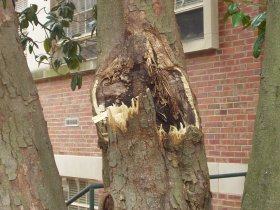
Damaged trees, such as the one shown here, may become nesting sites for carpenter ants. Watch the trees around your house for signs of ants 'moving in'. Learn more about the biology and control of carpenter ants.