- Common Name: Hover Fly
- General Category: Beneficial Predator
- Taxonomic Classification: Diptera: Syrphidae
- Scientific Name: Many species
Description
Adults (flies) feed on nectar in flowers, while the larvae (maggots) are voracious predators of aphids. Adults often mimic the color patterns of wasps and bees (compare to look-a-likes), presumably to gain protection from their own predators. However, unlike wasps and bees, these flies are incapable of stinging and are totally harmless.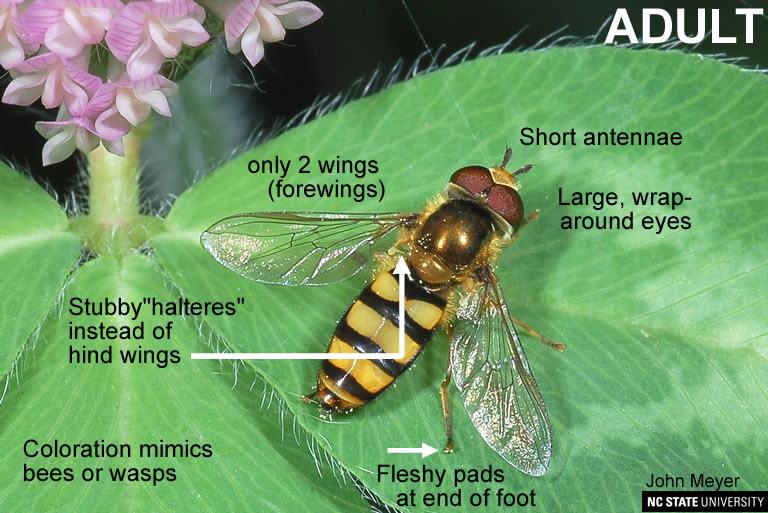
Identification
Review the images for tips on how to identify these predators.Adults
These flies live up to their names, and often spend much of their flight time hovering, unlike bees and wasps which have more directionality in their flight patterns. When they alight on a plant, notice they only have two wings (as opposed to four in wasps and bees) (compare to look-a-likes). Like all flies, their hind wings are greatly reduced (named halteres), and are used to balance them in flight. These flies also have very small antennae, as opposed to the long, often “elbowed” antennae in wasps and bees (compare to look-a-likes). Their eyes are often larger than those of wasps and bees, and may look like they wrap around the head (compare to look-a-likes).
Larvae
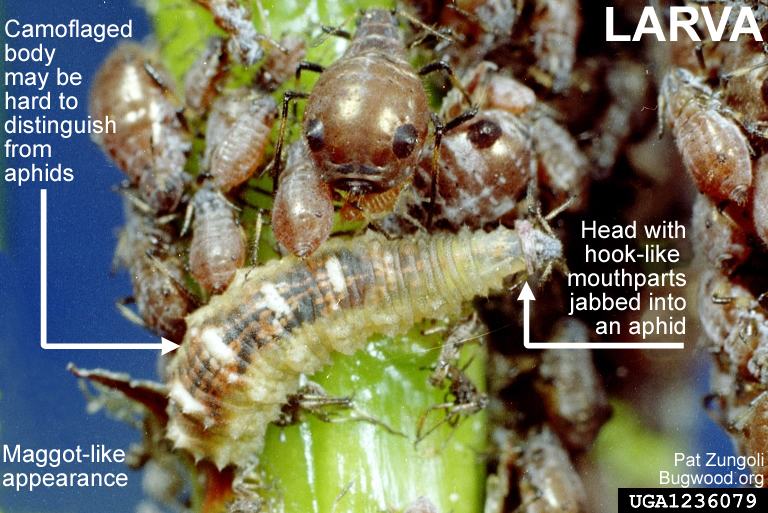
As with all flies these larvae are maggots. They may be camouflaged and blend in with their surroundings. The larvae have hooks for jaws that they use to consume aphids.