- Common Name: Assassin Bug
- General Category: Beneficial Predator
- Taxonomic Classification: Hemiptera: Reduviidae
- Scientific Name: Many species)
Description
These bugs are very general in their feeding habits. Like all true bugs (Hemiptera) these predators have a beak. To feed, they often grasp their prey with their front legs, then swing their beaks up from under their bodies to insert into the prey. They inject digestive enzymes through the beak that soon render the prey immobile, after which they suck up the digested insides. They can also inflict a painful bite if mishandled.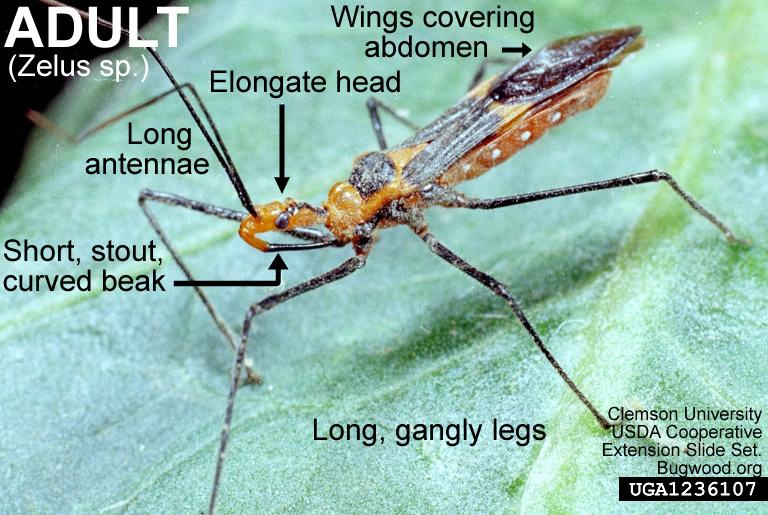
Identification
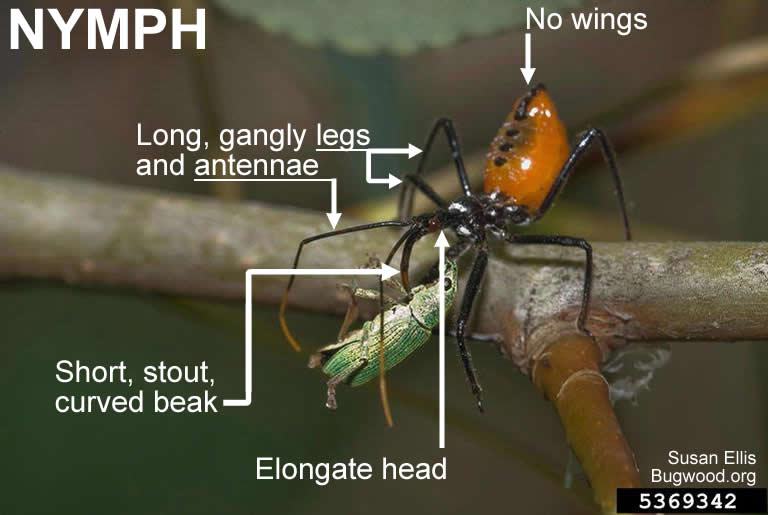
Review the images for tips on how to identify these predators.Adults
Like the predatory bugs, assassin bugs have beaks that are at least twice as thick as their antennae. However, the beaks are shorter, stouter, and curved. The beak tip fits into a groove between the front legs. The front legs may be raptorial, or grasping, like that of praying mantids. They have long, gangly legs and antennae that can sometimes make them appear spider-like. These are relatively large insects, ranging from about a third to over one inch in length.
Nymphs
Like adults, except lacking wings. Abdomen may be curved upwards, especially in younger nymphs.